
What are the long-term effects of Spravato? While Spravato (esketamine) is used for treatment-resistant depression, ongoing therapy carries documented clinical risks that require structured medical oversight. Safety data show that while many patients tolerate extended maintenance, the physiological effects of long-term use over multiple years remain under active clinical investigation.
Most observed side effects, such as mild dissociation, sedation, and temporary blood pressure elevations, are transient and typically peak shortly after administration before resolving within the clinic visit. While clinicians also monitor for less common considerations like urinary tract changes, structured protocol checks ensure these factors are proactively managed throughout maintenance care. Keep reading to examine clinical trial evidence, safety parameters, and ongoing monitoring standards.
Key Takeaways
- Long-term safety: Maintenance treatment may be safe for some patients, but risks over several years remain uncertain.
- Potential side effects: Blood pressure changes, dissociation, nausea, and sedation can occur. Persistent urinary or cognitive symptoms need evaluation.
- Ongoing monitoring: Regular checkups help track side effects, blood pressure, urinary symptoms, and cognitive changes.
What Are the Long-Term Effects of Spravato According to Clinical Research?
Clinical trials evaluating extended esketamine administration indicate that safety outcomes depend on pre-existing physical health, dosage, and individual metabolic tolerance.
To prioritize patient safety, Spravato is administered exclusively through certified medical centers enrolled in the REMS program. This established framework ensures that expected post-dose effects, including temporary blood pressure changes or sedation, occur in a controlled environment with healthcare professionals monitoring recovery for at least two hours after each session.
So, what do long term studies tell us? Some findings are reassuring, but there are limits to what researchers know. A study showing that many patients did well over time does not mean that everyone will have the same experience. It also cannot rule out rare problems that may take years to appear.
What Do Long Term Spravato Studies Show?

Researchers have followed adults receiving Spravato for depression that had not improved enough with other treatments. One study, called SUSTAIN 3, looked at people who continued treatment over an extended period. Patients considering Spravato treatment in Southfield can discuss their treatment goals and monitoring needs with a psychiatric provider.
Some participants maintained improvements in their depression symptoms. The side effects reported during the study were generally manageable among those who continued treatment.
There is an important detail, though. SUSTAIN 3 was an open label study, which means participants knew they were receiving esketamine. People who stayed in the study may also have been different from those who stopped. For example, some people may have left because of side effects or because the treatment was not helping enough.
The results are useful, but they do not tell the whole story. A doctor should keep checking whether Spravato is helping, whether side effects have appeared, and whether the patient still wants to continue.
Can Spravato Cause Long Term Bladder Damage?
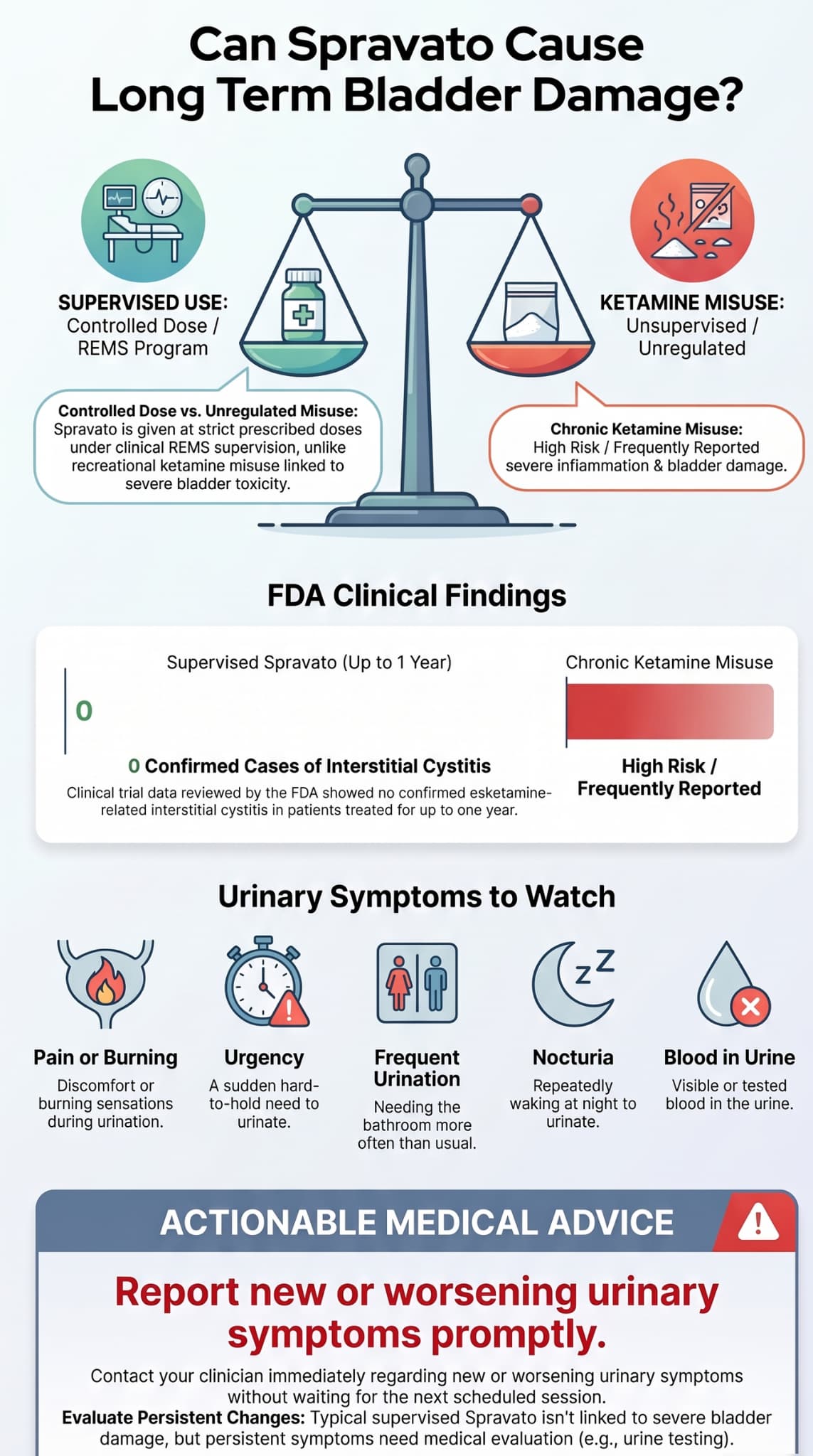
While lower urinary tract symptoms (LUTS) are monitored during long-term therapy, clinical trials lasting up to 12 months found no documented cases of classic interstitial cystitis (ketamine bladder syndrome) at therapeutic doses.
Severe bladder complications described in medical literature are primarily associated with high-dose, unregulated illicit ketamine use, which differs substantially from the calibrated doses and spaced intervals of supervised esketamine. Maintaining regular communication with a provider ensures any mild urinary changes are addressed early.
Interstitial cystitis is a long lasting bladder condition. It can cause bladder pain, pressure, and a frequent need to urinate. Severe bladder inflammation has also been reported in people who misuse ketamine. Those reports do not prove that supervised Spravato causes the same damage.
“There have been no published investigations on the urothelial toxicity of ketamine and esketamine when used in antidepressant dose and indication” – Urothelial Toxicity of Esketamine in the Treatment of Depression, Psychopharmacology
The safest approach is to pay attention to new symptoms and discuss them with a clinician. There is no need to assume the worst, but persistent changes should not be brushed aside either.
Which Urinary Symptoms Should Patients Watch For?
Patients should tell their healthcare provider if their usual urination pattern changes. Watch for symptoms such as:
- Pain or burning when urinating: This can occur with a urinary tract infection or another urinary condition.
- Urgency: A sudden need to urinate that is hard to hold.
- Frequent urination: Needing to use the bathroom more often than usual.
- Nocturia: Waking up during the night to urinate repeatedly.
- Blood in the urine: Blood may be visible or found during a urine test.
These symptoms do not automatically mean Spravato has harmed the bladder. Urinary infections, kidney stones, and other health problems can cause similar changes. A doctor may recommend a urine test or other checks to find the cause. Patients seeking in-person care can find Spravato treatment in Southfield at Modern Mind Clinic.
Blood in the urine, ongoing pain, or symptoms that keep getting worse need prompt medical attention. Patients should not wait for their next Spravato appointment to mention them.
Does Spravato Cause Long Term Memory Loss or Cognitive Problems?

There is no clear evidence that prescribed Spravato causes progressive cognitive decline. But research on long term use is still limited, so ongoing problems with memory or concentration deserve attention.
It helps to separate short term effects from symptoms that continue after treatment. Spravato can affect attention, judgment, reaction time, and coordination soon after a dose. These effects are one reason patients must remain under observation.
Can Spravato Cause Lasting Memory Loss or Cognitive Problems?
Esketamine produces immediate, measurable cognitive disruption. Standardized testing demonstrates sharp temporary declines in attention, processing speed, and executive function approximately 40 minutes post-dose, which typically resolve back to baseline around the two-hour mark.
Regarding long-term impact, formal study groups (including the SUSTAIN-3 open-label trial up to 160 weeks) showed stable group-average cognitive test scores over time.
“Cognitive functioning remained stable over time” – DailyMed
However, group averages do not guarantee individual immunity against cognitive changes. Prolonged, unmonitored dissociative exposure can impact memory consolidation in sensitive populations, meaning any persistent memory deficits or attention changes occurring outside the immediate dosing window warrant diagnostic reassessment.
Does Spravato Cause Permanent Brain Damage?

Clinical evidence does not indicate that supervised Spravato treatment causes permanent brain damage or progressive cognitive decline. The neurotoxic concerns often cited in general discussions stem from chronic, unregulated ketamine misuse, which involves significantly higher cumulative exposures than medical depression protocols.
In clinical settings, short-term cognitive effects are expected during the observation window, while long-term studies reflect overall cognitive stability under consistent psychiatric care.
Still, patients should not ignore changes that affect daily life. Ongoing confusion, trouble remembering important information, or difficulty concentrating should be discussed with a healthcare provider. A review of depression treatment options may also help patients and clinicians assess the overall treatment plan. It is better to check than to assume these changes are harmless.
Is Spravato Safe for Long-Term Use? Key Risks to Consider
For many individuals navigating treatment-resistant depression, long-term Spravato therapy offers a viable pathway toward sustained symptom relief when paired with reliable clinical oversight. Regular checkups provide peace of mind by tracking routine markers such as blood pressure, urinary comfort, and overall cognitive wellness.
Modern Mind Clinic in Southfield, Michigan, offers a structured, supportive setting where your care plan and recovery are continually evaluated by psychiatric providers. Contact Modern Mind Clinic to discuss your progress, evaluate maintenance options, and ensure your treatment remains safe and effective for your long-term goals.
FAQs
What Are the Long-Term Effects of Spravato on Cognitive Function and Memory?
What are the long-term effects of Spravato on cognitive function? Current clinical research indicates that cognitive performance generally remains stable during long-term maintenance treatment. While temporary grogginess or dissociation can occur shortly after administration, persistent memory decline has not been established as a typical outcome. Patients experiencing ongoing cognitive changes should consult their psychiatric provider for a comprehensive evaluation.
Does Prolonged Esketamine Treatment Increase the Risk of Bladder Damage?
Bladder damage has been reported with repeated recreational ketamine use, but the risk associated with supervised esketamine treatment remains unclear. Patients receiving prolonged treatment should report frequent urination, urinary urgency, pain during urination, or blood in the urine. A clinician can assess these symptoms, investigate possible causes, and determine whether urine tests or other examinations are necessary.
Can Depression Return After Stopping Long-Term Esketamine Treatment?
Depression symptoms may return after treatment stops, particularly if the underlying condition remains active. However, not every patient experiences a relapse, and stopping treatment does not necessarily cause withdrawal symptoms. Patients should discuss the risks and benefits of discontinuation with their prescribing clinician. Follow up appointments can help identify returning symptoms and determine whether additional treatment or other support is needed.
Can Patients Develop Tolerance During Long-Term Esketamine Treatment?
Tolerance occurs when the body responds less strongly to a medicine after repeated exposure. Evidence about tolerance during prolonged esketamine treatment remains limited. If patients notice that their depression symptoms are returning or the treatment seems less effective, they should discuss these changes with their prescribing clinician. The clinician can review symptom patterns, treatment response, and possible reasons for reduced benefit before adjusting the treatment plan.
How Often Should Patients Be Monitored During Long-Term Esketamine Treatment?
The monitoring schedule depends on the patient’s treatment frequency, medical history, response, and side effects. Follow-up assessments may include blood pressure measurements, depression symptom reviews, and questions about memory, urinary symptoms, and changes in perception. Patients should report new or persistent symptoms promptly instead of waiting for their next appointment. The prescribing clinician can determine whether additional tests or treatment changes are necessary.